
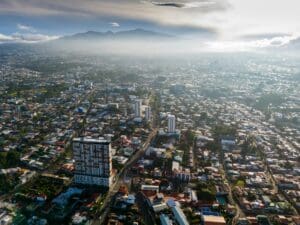
Downtown San Jose stands as the urban and economic heart of Silicon Valley. Driven by ambitious municipal transit goals, expanding corporate footprints, and sustained demand for high-density housing, the city core has become a focal point for multi-family and mixed-use infill development. From mid-rise residential complexes along the transit corridors to historic adaptive reuse projects near Diridon Station, navigating this market requires an intricate understanding of physical, economic, and regulatory forces.
For developers, private equity investors, lenders, and property owners, assessing the economic feasibility of a downtown San Jose asset is far from straightforward. Relying on automated valuation models or generic regional cap rates often leads to significant miscalculations. Achieving an accurate, court-defensible market value requires a dedicated multi-family appraisal in San Jose that accounts for local tenant protection ordinances, transit-oriented development zoning, construction cost escalations, and evolving retail absorption rates.
The Valuation Dilemma in Downtown San Jose
Valuing multi-family properties—ranging from 5 to 50+ units—and mixed-use infill developments in San Jose presents a unique combination of challenges. Unlike suburban single-family subdivisions where comparable sales are relatively uniform, downtown infill properties feature diverse density allowances, varying age profiles, and contrasting income structures.
1. The Interplay of Land Use and Transit-Oriented Density
San Jose’s General Plan emphasizes high-density infill along designated urban villages and transit corridors. A parcel’s underlying zoning, floor area ratio limits, and height allowances dictate its highest and best use. Determining whether an existing 12-unit residential building represents a stabilized income asset or a prime redevelopment site requires a sophisticated highest and best use analysis. An appraiser must evaluate whether the current improvements contribute value or if the land’s underlying entitlement potential exceeds the value of the existing structure as improved.
2. Rent Control and Municipal Regulations
San Jose’s Apartment Rent Ordinance applies to properties with three or more apartments built on or before September 7, 1979. These rent-stabilized units carry specific annual rent increase limits and just-cause eviction protections. Conversely, newer multi-family developments fall under state-level legislation such as the California Tenant Protection Act (AB 1482), or remain exempt depending on their date of construction. An accurate appraisal must thoroughly audit the current rent roll, separate stabilized legacy rents from market-rate units, and correctly forecast long-term income growth potential.
3. Mixed-Use Ground Floor Retail Dynamics
Mixed-use infill developments frequently incorporate ground-floor retail or commercial space beneath multi-story residential units. While ground-floor commercial space satisfies municipal active-use mandates, retail absorption rates in urban centers can lag behind residential demand. A comprehensive valuation must analyze the commercial and residential components separately, applying distinct capitalization rates, vacancy assumptions, and tenant creditworthiness criteria to each stream of cash flow.
Economic and Legal Implications for Investors and Lenders
Failing to properly evaluate a multi-family or mixed-use asset in Silicon Valley carries substantial financial risk. Lenders requiring underwriting for acquisition financing or construction loans need defensible estimates of both As-Is and As-Completed market values.
Capitalization rates in prime Silicon Valley locations often reflect compressed yields driven by long-term institutional demand and land scarcity. However, applying a blanket low cap rate without factoring in deferred maintenance, seismic retrofit requirements, or upcoming tenant turnover can lead to inflated valuations. An independent valuation carefully extracts cap rates from verified local transactions, adjusting for physical condition, lease structure, and utility metering configurations.
Construction Feasibility and Pro-Forma Audits
For proposed infill developments, the appraisal serves as the cornerstone of the feasibility study. Developing a pro-forma projection requires verifying proposed construction budgets against current regional material and labor costs, assessing entitlement risks, and evaluating realistic lease-up periods. Oversimplified income projections can disguise a project’s financial vulnerability to interest rate shifts or construction delays.
The Independent Valuation Approach: Precision in Complex Markets
Navigating the nuances of San Jose real estate requires an objective methodology grounded in local market data and professional standards. Pacific Appraisers delivers comprehensive valuations tailored to commercial lenders, private funds, estate planners, and property owners throughout Northern California.
Application of the Three Traditional Approaches to Value
A comprehensive multi-family appraisal in San Jose relies on a balanced evaluation using all three classical approaches:
-
The Income Capitalization Approach: This serves as the primary method for income-producing multi-family and mixed-use assets. It involves analyzing historical operating statements, establishing stabilized Net Operating Income (NOI), and applying both direct capitalization and discounted cash flow (DCF) models for complex, multi-year lease-up scenarios.
-
The Sales Comparison Approach: By evaluating recent transfers of comparable multi-family assets within San Jose and adjacent Silicon Valley submarkets, the appraiser adjusts for differences in location, unit mix, age, condition, parking ratios, and physical amenities. Metrics such as price per unit, price per square foot, and Effective Gross Income Multipliers (EGIM) provide critical benchmarks.
-
The Cost Approach: Particularly vital for proposed construction or newly completed infill projects, this method estimates the land value as if vacant and adds the current replacement cost of the improvements, subtracting all forms of physical deterioration, functional obsolescence, and external obsolescence.
Adherence to USPAP Standards
Every report generated by Pacific Appraisers complies strictly with the Uniform Standards of Professional Appraisal Practice (USPAP). This adherence ensures that our findings stand up to rigorous scrutiny from institutional underwriting departments, regulatory authorities, tax assessors, and legal proceedings. By maintaining strict independence, we provide unbiased valuation insights free from external pressure.
Conclusion and Professional Consultation
Downtown San Jose remains one of the most dynamic real estate markets in the nation, offering exceptional opportunities alongside intricate regulatory and economic demands. Whether you are acquiring a stabilized 20-unit residential asset, planning a transit-oriented mixed-use infill project, or completing a portfolio valuation for trust and tax purposes, precise and defensible valuation is essential.
Pacific Appraisers provides independent valuation and consulting services across Santa Cruz, Monterey, and the greater San Francisco Bay Area. Contact our team today to schedule a confidential consultation for your commercial, multi-family, or complex residential asset.