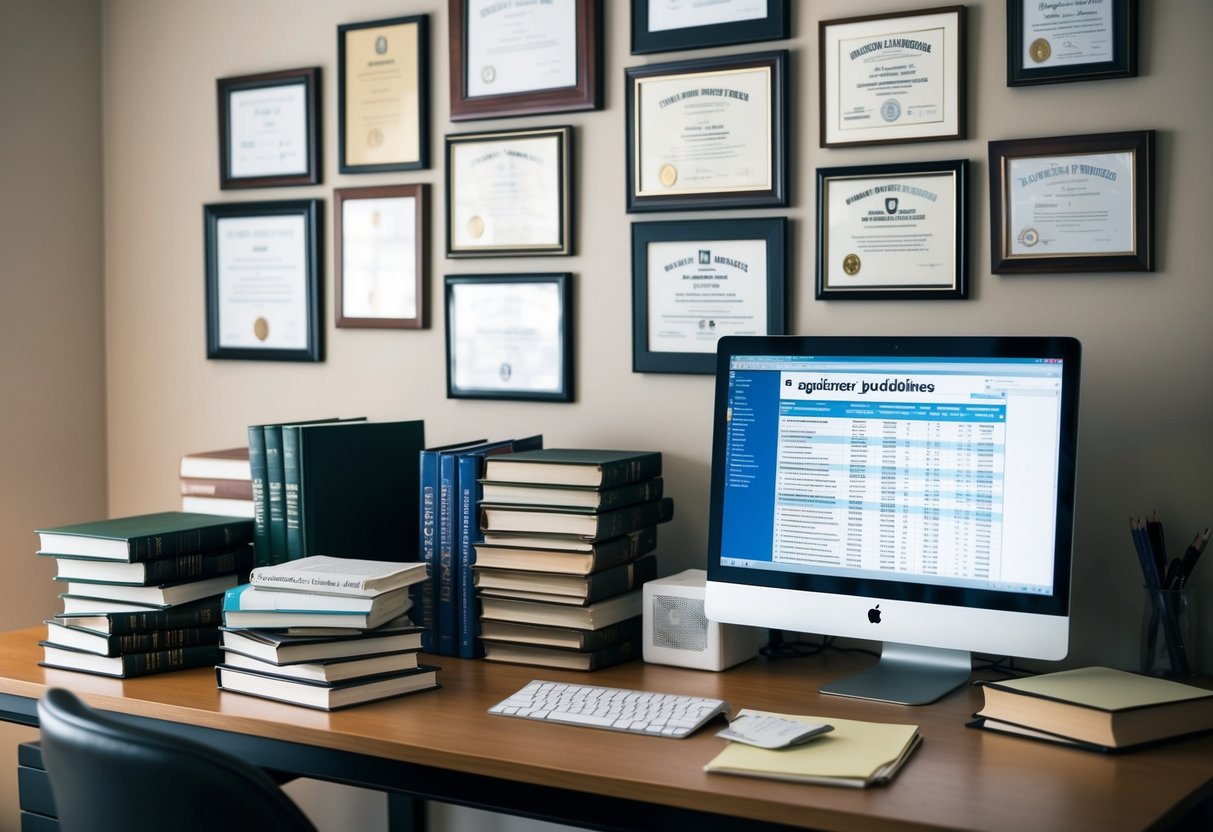
Gaining Practical Experience in Commercial Real Estate Appraisal: Key Steps to Success

Pathways to Becoming a Commercial Real Estate Appraiser

A commercial real estate appraiser carefully inspects a large office building, taking notes and measurements of the property's exterior and interior features

In our exploration of commercial real estate appraisal, we find that understanding credentials, education, and experience are critical. Different paths suit diverse interests and goals but all require commitment and effort. Let’s delve into what it takes to become a certified appraiser.

Understanding Real Estate Appraiser Credentials

To start, there are several credentials for appraisers. The Certified Residential Appraiser deals mainly with residential properties. In contrast, the Certified General Appraiser is qualified to handle both residential and commercial real estate.

Obtaining these credentials involves meeting specific criteria set by regulatory boards. Each credential requires passing an examination that tests our knowledge of real estate appraisal principles. These exams are a critical step in acquiring official recognition in this field.

Educational Foundations for Appraisers

Education forms the backbone of any appraiser’s career. We must complete certain courses to understand real estate markets and appraisal techniques. These usually cover topics like property valuation, market analysis, and ethical standards.

Programs range from a Licensed Residential course to a Certified General degree. Real Property Appraiser Qualification Criteria often dictate specific subjects and credit hours needed. Online classes and in-person lectures are both popular options, providing flexibility for different learning styles.

Experience Requirements for Appraisal Certification

Gaining the right experience is essential to becoming a certified appraiser. We must work under a licensed appraiser to develop our skills. The experience requirement varies by credential.

For a Certified Residential Appraiser, we need fewer hours. However, the Certified General Appraiser demands comprehensive experience, including work with commercial real estate. Logging each hour carefully is crucial, as this documentation is part of our certification application.

Meeting these requirements not only fulfills certification criteria but also equips us with practical insights into various property types and market conditions.

Appraisal Standards and Methodologies

In commercial real estate appraisal, following established guidelines is crucial. We need to focus on the relevant standards and then apply the right methodologies practically.

Appraisal Institute and USPAP Guidelines

The Appraisal Institute plays a critical role in setting high standards within our industry. It collaborates with the Appraiser Qualifications Board and the Appraisal Foundation to create comprehensive programs. Uniform Standards of Professional Appraisal Practice (USPAP) are essential guidelines we must follow.

These guidelines help us maintain integrity and credibility. They ensure our reports are reliable and consistent. USPAP covers specific requirements for ethics, standards, and procedures. By adhering to these, we stay aligned with industry norms.

Practical Applications and Methodology

Our work often involves applying various methodologies to assess value. We rely on market analysis, appraisal theory, and real-world simulations to determine an accurate estimate. Techniques like sales comparison, income capitalization, and cost approaches are commonly used.

Analyzing trends and data lets us make informed decisions. Applying these methods helps us convert theoretical knowledge into practical appraisal experience. By incorporating analytics, we refine our approach further. Our goal is to ensure our evaluations are both accurate and current with market conditions.

Gaining Practical Experience and Technology Integration

A person using a tablet to analyze real estate data in an office with charts and graphs on the computer screen

Practical experience is crucial for real estate appraisers, as it helps them understand complex market dynamics. In this section, we explore on-the-job training models, innovative programs like PAREA, and modern technologies in the appraisal field.

Supervised On-the-Job Training and the Supervisor/Trainee Model

In our industry, practical experience is a key component of gaining proficiency. Supervised on-the-job training allows us to learn under the guidance of experienced appraisers. This hands-on approach helps new appraisers understand real estate valuation in real-world settings.

The Supervisor/Trainee Model is the cornerstone of this training. Each trainee is paired with a supervisory appraiser, who mentors them through daily tasks. This model ensures trainees gain valuable insight while applying theoretical knowledge. Our field’s reliance on practical skills highlights on-the-job experience as an essential part of an appraiser’s education.

The PAREA Program: An Innovative Approach

We also explore the PAREA (Practical Applications of Real Estate Appraisal) Program, a cutting-edge approach for gaining practical experience. This program offers structured courses and remote learning opportunities. By expanding access, it allows more individuals to enter the profession and start their careers.

PAREA provides a robust pathway for trainees to meet industry standards. It combines coursework with assignments reflecting real-world scenarios. This innovative approach offers us an alternative to traditional models and supports those without access to local supervisors. Through PAREA, we can bridge the gap between theory and practice more effectively.

Utilizing Advanced Technologies in Real Estate Appraisal

Integrating technology into appraisals is transforming our industry. Virtual reality technologies and innovative tools offer new ways to evaluate properties. We can access detailed property data and visualize spaces through virtual environments, providing richer insights.

Advanced software streamlines data analysis and financial calculations for accurate appraisals. By embracing these technologies, we enhance accuracy and efficiency. Our use of digital tools allows us to conduct appraisals remotely, giving greater flexibility. This tech integration is crucial as we adapt to the evolving demands of real estate finance.

Degree Programs for Becoming a Commercial Real Estate Appraiser in California: Top Options and Pathways

Education and Licensing Pathways

A person studying books and notes at a desk with a California map and real estate diagrams

To become a commercial real estate appraiser in California, we must understand the classification system, discuss the educational pathways, and explore the necessary training programs. Our journey involves satisfying licensing requirements and completing the application and examination process to advance in this field.

Understanding Appraiser Classifications in California

California uses various appraiser classifications to define the scope of work. These include the Trainee License, Licensed Residential, Certified Residential, and Certified General Appraiser. Each requires different levels of education and experience.

The Bureau of Real Estate Appraisers (BREA) governs these classifications in California. Meeting these classifications is crucial in our career journey.

The Certified General License allows us to appraise all types of properties. It’s vital for those aiming to evaluate commercial and complex real estate transactions.

Educational Pathways to Appraisal Licensure

Educational requirements vary for each appraiser type. A higher certification demands more advanced education. To start, a high school diploma is needed, along with basic appraisal training.

For a Certified Residential Real Estate Appraiser, we need an associate’s degree or equivalent college credits. The Certified General Appraiser must hold a bachelor’s degree.

Taking approved courses is mandatory. Classes may cover subjects like Basic Appraisal Principles, statistics, and real estate law. These courses shape our knowledge and skills for future property assessments.

Appraisal Principles and Procedures Training

Training involves specific courses such as Appraisal Principles and Basic Appraisal Procedures. These courses form the foundation of real estate appraisal.

Every aspiring appraiser should also complete the National USPAP Course, focusing on ethical guidelines and standards.

In-depth property valuation and market analysis are part of this curriculum. Emphasizing real-world applications, the training helps us make accurate appraisals. Success in this field relies on understanding market trends and data interpretation.

The Application and Examination Process

Once educational and training requirements are met, we begin the application process. This means submitting forms and supporting documents to the BREA. Our application must include proof of completed courses and experience logs, if applicable.

After approval, we must pass a licensing exam that tests our readiness to appraise properties in California. The exam covers technical knowledge and practical skills.

Preparation involves reviewing materials and understanding state laws related to property appraisal. Success in the exam advances our career, providing the qualifications needed for real estate appraisal.

Career Progression and Professional Development

A person studying in a classroom with real estate and appraisal textbooks, charts, and diagrams on the wall

To succeed as a commercial real estate appraiser in California, we must follow a structured career path. This involves starting as a trainee, gaining experience, advancing through certification levels, and regularly updating our knowledge.

Starting as an Appraiser Trainee

Beginning our journey as an appraiser trainee is the first step. It requires us to complete the necessary educational courses in appraisal practice, focusing on subjects like market analysis. As a trainee appraiser, we work under supervision, which allows us to learn from experienced professionals.

We gain hands-on experience by assisting in preparing appraisal reports and understanding the real estate market. The goal is to develop skills that are essential for accurate property valuation. This stage lays the foundation for our future roles and responsibilities in appraising real estate.

Gaining Practical Experience

Our next step is to gain practical experience in the field. We need to accumulate a specific amount of experience hours, usually determined by California’s appraiser licensing requirements. This experience allows us to apply what we’ve learned in real situations, ensuring we deepen our understanding of the market.

We continue working under supervision, participating in diverse appraisal assignments. This helps us refine our skills in residential market analysis and culturally competent appraising methods. Our experience also exposes us to various types of properties, preparing us for advanced roles.

Advancing to Certified Residential and General Levels

Advancement requires us to meet higher educational and experiential requirements. We start by becoming a licensed residential appraiser, opening more opportunities and increasing our real estate appraiser salary potential. The next step is to aim for certified residential or general levels.

Achieving these certifications involves additional appraisal education and successfully passing comprehensive exams. Advancing through these levels showcases our capability in undertaking more complex appraisals, enhancing our credibility in the industry.

Continuing Education and License Renewal

Staying current in our profession is crucial. We must complete continuing education courses to keep our knowledge up-to-date. These courses cover new laws, market trends, and techniques in appraisal practice. License renewal is necessary every two years in California, ensuring we meet the state’s requirements.

Continuing education also helps us focus on emerging areas, such as technology in appraisals or changes in the real estate market. This ongoing learning process is key to maintaining our licenses and enhancing our expertise as appraisers. Regular updates ensure our services remain valuable and legally compliant.