
Appraising Infill and Ground-Floor Retail in Downtown Hollister’s Revitalization
Downtown Hollister is undergoing a noticeable transformation. As San Benito County grows, municipal investments, historic streetfront upgrades, and new mixed-use developments are reshaping the commercial core. Historic multi-story structures, traditionally used solely for single-tenant retail, are increasingly adapting to house boutique storefronts on the ground level with residential or office units above.
For commercial property owners, real estate investors, and regional lenders, these changes present both significant opportunity and valuation complexity. Determining the market value of mixed-use real estate or ground-floor retail in a revitalizing downtown corridor requires more than applying regional averages. An accurate valuation demands a granular, localized approach that evaluates changing lease structures, pedestrian foot traffic, tenant creditworthiness, and local zoning policies.
Understanding how downtown revitalization initiatives directly influence commercial property values, market cap rates, and ground-floor retail performance is essential for making informed investment decisions in Hollister.

The Commercial Valuation Landscape in Downtown Hollister
Hollister occupies a unique position in Northern California’s commercial real estate market. Positioned adjacent to Silicon Valley and the agricultural centers of the Salinas Valley, San Benito County has experienced steady population growth. In response, local planning initiatives have encouraged downtown infill development, revitalization of historic facades, and streetscape enhancements along San Benito Street.
While these improvements elevate the overall appeal of the district, they introduce distinct appraisal challenges:
-
Hybrid Property Types: Mixed-use properties require dual-valuation methodologies, balancing commercial leasing metrics for ground-floor space with residential multi-family dynamics on upper floors.
-
Functional Obsolescence vs. Historic Charm: Older commercial structures often feature unique architectural character, but they may also lack modern building systems, fire suppression infrastructure, ADA accessibility, or updated loading access.
-
Evolving Rent Profiles: Historical rental rates in downtown Hollister may not accurately reflect current achievable market rents for modern, redeveloped streetfront commercial spaces.
A standard Automated Valuation Model (AVM) or an appraiser accustomed to uniform suburban strip centers will often fail to capture these nuances. Valuing commercial real estate in Hollister requires an in-depth understanding of the hyper-local market dynamics driving San Benito County.
Key Valuation Factors for Downtown Commercial Assets
When conducting a comprehensive commercial appraisal for retail or mixed-use assets in downtown Hollister, certified appraisers focus on several core metrics to establish fair market value.
1. Income Capitalization and Cap Rate Trends
The primary approach for valuing income-producing commercial real estate is the Income Capitalization Approach. This method converts a property’s net operating income (NOI) into a value estimate using a market-derived capitalization rate (cap rate).
In revitalizing downtown districts, cap rates can vary widely based on tenant strength, lease terms (such as Triple-Net vs. Modified Gross), and property condition. Appraisers analyze recent commercial transactions across San Benito County to establish defensible, risk-adjusted cap rates that reflect current market conditions.
2. Tenant Mix and Lease Terms
Ground-floor retail spaces depend heavily on tenant quality and lease structure. Appraisers carefully review existing lease agreements, looking at:
-
Contract rent versus current fair market rent.
-
Term length and renewal options.
-
Expense-stop provisions and tenant reimbursement structures.
-
Tenant credit risk and business viability within the downtown ecosystem.
A retail property anchored by a stable, multi-year local tenant or regional brand commands lower risk expectations than a property with frequent tenant turnover or below-market rental rates.
3. Infill Density and Highest and Best Use Analysis
A critical component of any commercial valuation is determining the property’s Highest and Best Use. With Hollister encouraging higher-density infill development, a single-story retail building on a prime downtown corner parcel may hold land value or redevelopment potential that exceeds its current income stream. An independent appraisal evaluates whether the existing structure represents the highest return or if future expansion, vertical integration, or adaptive reuse drives the underlying property value.
The Role of Local Expertise in Commercial Property Valuation
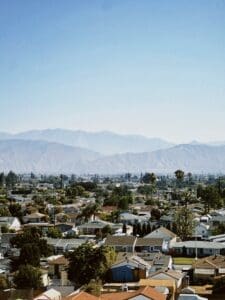
Evaluating commercial real estate during a period of civic revitalization requires local context and rigorous professional standards. Commercial property appraisals in California must strictly comply with the Uniform Standards of Professional Appraisal Practice (USPAP), ensuring that all findings are fully documented, defensible, and objective.
An independent valuation provides essential clarity for multiple financial and strategic scenarios:
-
Financing and Refinancing: Lenders require reliable, court-ready, and USPAP-compliant appraisals before underwriting commercial acquisition or construction loans.
-
Partnership Dissolution and Buyouts: Objective property valuations ensure equitable resolution when partners choose to restructure or divest commercial real estate assets.
-
Tax and Estate Planning: Retrospective valuations and current market appraisals establish accurate tax bases for multi-generational commercial property transfers in San Benito County.
-
Pre-Purchase Due Diligence: Investors rely on independent appraisals to confirm that contract prices align with verifiable market fundamentals rather than speculative growth.
By grounding valuations in verifiable market sales, verified local income data, and detailed property inspections, independent commercial appraisals deliver an unbiased assessment of property value.
Strategic Guidance for Hollister Property Owners and Investors
As downtown Hollister continues to attract investment, commercial property owners should take a proactive approach to managing and evaluating their real estate portfolios. Tracking local rent movements, monitoring municipal development plans, and keeping detailed records of capital improvements ensure that your commercial assets are positioned for long-term growth and stability.
Whether you are acquiring an infill retail property, refinancing a mixed-use commercial building, or navigating an estate settlement, having an authoritative valuation performed by local commercial appraisal specialists ensures your financial decisions are based on objective facts.
Pacific Appraisers provides comprehensive commercial, industrial, agricultural, and specialized real estate valuation services throughout San Benito County, Monterey County, Santa Cruz County, and the broader San Francisco Bay Area.
To discuss your commercial property valuation needs with a certified appraiser, contact our team today for a confidential consultation.