Beyond the Land: What Drives Agricultural Property Value in Monterey County?
Agricultural Property Appraisal Monterey County: Valuing Farmland, Water Rights, and Infrastructure
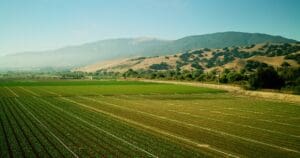
Monterey County is globally recognized as one of the most productive agricultural regions in the United States. Often referred to as the Salad Bowl of the World, the fertile soils of the Salinas Valley and surrounding coastal corridors produce high-value specialty crops ranging from leafy greens and berries to premium wine grapes. However, determining the true market value of agricultural real estate across this region requires far more than calculating basic acreage. A comprehensive agricultural property appraisal in Monterey County must account for intricate microclimates, complex water rights, soil quality classifications, and specialized physical infrastructure.
When farm owners, agricultural lenders, institutional investors, or family trusts require an accurate valuation, automated valuation models and generalized commercial appraisals fall short. Valuing agricultural holdings requires deep local market intelligence, strict adherence to professional appraisal standards, and an objective analysis of property-specific utility.
The Complex Realities of Monterey County Farmland Valuations
Evaluating agricultural land throughout Monterey County involves analyzing variables that are entirely unique to Central Coast farming. Unlike Midwestern row-crop acreage or uniform real estate developments, every agricultural parcel between the Santa Lucia Range and the Gabilan Mountains carries distinct physical and legal characteristics.
Soil Classification and Microclimates
The soil composition directly dictates crop yield, crop rotation possibilities, and long-term land capability. Prime farmland featuring Class I and Class II alluvial soils commands a significant premium over lower-tier ground. Furthermore, coastal proximity introduces specific microclimates. Northern valley parcels closer to Monterey Bay benefit from marine fog and cooler temperatures ideal for cool-season vegetables like lettuce, broccoli, and celery, as well as berries. Heading south toward King City and Greenfield, higher heat units shift the land utility toward wine grapes, tomatoes, and forage crops. An appraiser must measure how these physical limitations influence the land’s highest and best use.
Groundwater Availability and Water Rights
Water security is arguably the most critical component of agricultural value in California. In Monterey County, agricultural operations rely heavily on groundwater basins managed under the Sustainable Groundwater Management Act (SGMA). An appraisal must evaluate:
-
Groundwater quality, including salinity levels and potential seawater intrusion risks in coastal zones.
-
Pumping capacity and well infrastructure reliability.
-
Adjudicated water rights, allocation limits, and compliance costs under local Groundwater Sustainability Agencies (GSAs).
-
Historical water usage records and irrigation efficiency.
A parcel with abundant, high-quality groundwater and updated pumping infrastructure maintains a fundamentally different asset value than neighboring land facing pumping restrictions or deteriorating water quality.
Specialized Agricultural Infrastructure
Valuing agricultural real estate extends beyond the dirt. On-site improvements and specialized structures significantly impact property utility and income capability:
-
High-capacity irrigation systems, underground mainline piping, and automated filtration plants.
-
Coolers, cold storage facilities, and packing sheds that support post-harvest processing.
-
Worker housing facilities, equipment barns, and staging yards.
-
Permanent crop installations, such as trellised vineyards or berry hoop houses, which require distinct capitalization analyses.
Legal and Financial Implications for Property Owners
Agricultural property owners throughout Monterey County require precise appraisals across a range of legal, financial, and strategic scenarios.
Financing and Commercial Lending
Agricultural lenders require objective, USPAP-compliant valuations before underwriting land acquisitions, infrastructure expansion loans, or operating lines of credit. Because agricultural values fluctuate based on crop economics and environmental factors, lenders rely on defensible valuations that accurately reflect land productivity rather than speculative trends.
Estate Planning, Trust Administration, and Tax Compliance
Family-owned farming operations represent multi-generational assets. Establishing an accurate baseline value is essential when executing estate plans, navigating gift tax reporting, or settling date-of-death valuations. Furthermore, many agricultural properties in Monterey County are enrolled in Williamson Act (Land Conservation Act) contracts, which restrict land use in exchange for property tax assessments based on agricultural income rather than market value. Valuing restricted land for estate or tax purposes requires specialized valuation techniques.
Partnership Dissolutions and Land Division
When agricultural partnerships dissolve or family co-owners seek a buyout, establishing an unbiased valuation prevents prolonged disputes. Appraisers must evaluate partial interests, leasehold structures, and tenant-farmer lease agreements to deliver a clear financial benchmark for all parties involved.
The Local Appraiser Approach to Agricultural Valuations
Delivering a court-defensible and bank-grade valuation requires an appraiser who understands the local agricultural ecosystem. At Pacific Appraisers, our approach combines rigorous methodology with on-the-ground local expertise.
Application of Appraisal Methodologies
In accordance with the Uniform Standards of Professional Appraisal Practice (USPAP), an agricultural appraisal synthesizes three primary approaches to value:
-
Sales Comparison Approach: Comparing the subject property to recent sales of similar agricultural acreage in Monterey County. Adjustments are carefully quantified for soil capability, water access, parcel size, location, and Williamson Act status.
-
Income Capitalization Approach: Converting the net operating income generated by crop production or cash-lease agreements into an indication of capital value. This approach analyzes local cash rents, crop-share agreements, and typical landlord expenses across the Salinas Valley.
-
Cost Approach: Evaluating the replacement cost of physical improvements, such as wells, irrigation networks, and packing structures, adjusted for physical depreciation and functional obsolescence.
Beyond Automated Data
Generic valuation algorithms and distant appraisers often fail to account for hyper-local nuances. An automated model cannot read a well test report, evaluate the impact of a local GSA pumping limit, or differentiate between prime vegetable ground and ground constrained by drainage issues. Independent, on-site inspections combined with verification of public records, water basin data, and agricultural lease trends ensure that every report stands up to scrutiny from financial institutions, legal counsel, and tax authorities.
Whether managing a multi-generational row-crop ranch in the Salinas Valley, a vineyard in the Arroyo Seco AVA, or coastal farmland near Watsonville and Pajaro Valley, an accurate valuation serves as the foundation for sound financial decision-making.
Request an Agricultural Property Appraisal
Pacific Appraisers delivers independent, high-authority valuation services across Monterey County, Santa Cruz County, and the greater San Francisco Bay Area. To discuss your agricultural property, commercial asset, or private estate valuation needs with an expert appraiser, contact our team today for a confidential consultation.





 .
.